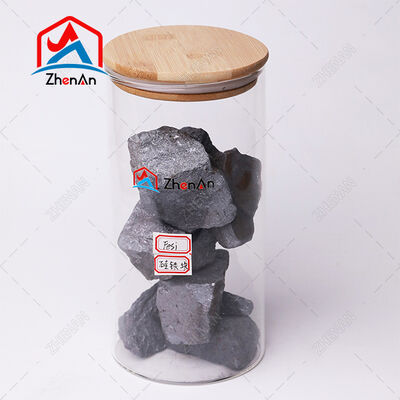
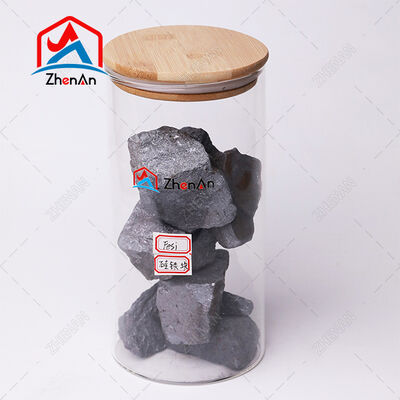
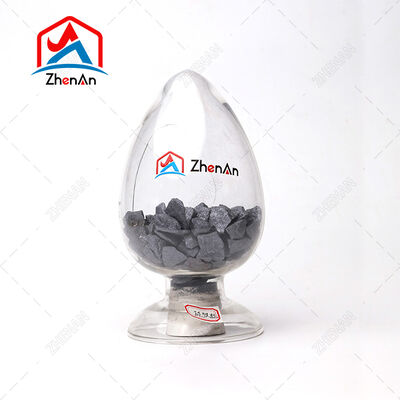
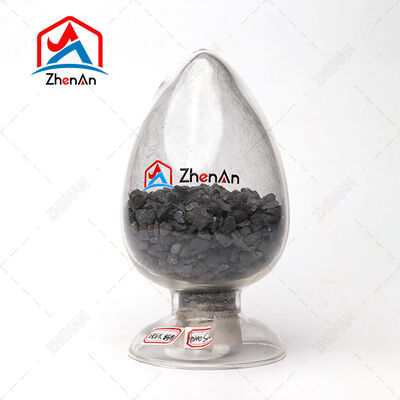
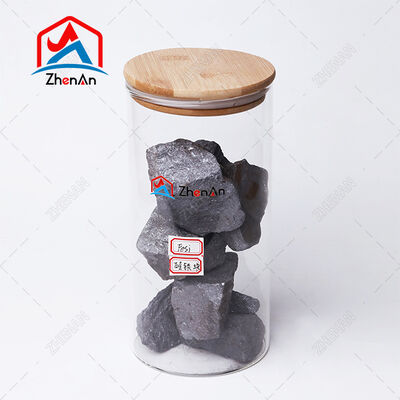
Ferro silicium FeSi 75 / 72 morceau pour la sidérurgie
Désoxydant de haute pureté fournisseur d'additifs pour alliages métallurgiques
Ferro silicium (FeSi 75/72)est un désoxydant primaire pour la sidérurgie qui élimine efficacement l'oxygène de l'acier fondu tout en améliorant le contrôle de la teneur en silicium, la propreté de l'acier,et propriétés mécaniques finales dans les procédés métallurgiques et de fonderie.
WhatsApp pour les demandes:+86 15518824805
Ferrosilicium de qualité métallurgique destiné à la sidérurgie
Comment le FeSi 75/72 agit-il comme désoxydant dans la sidérurgie?
Dans le raffinage de l'acier, le contrôle de l'oxygène est essentiel pour éviter les défauts tels que la porosité, les inclusions et la fragilité.Ferrosilicium (FeSi 75 ou FeSi 72)agit comme un agent désoxydant puissant en réagissant avec l'oxygène dissous dans l'acier fondu.
Réactions clés:
- Silicium + oxygène → SiO2 (élimination de la phase de la boue)
- L'oxygène est transféré de l'acier vers les scories
- Une structure d'acier fondu propre est obtenue
Cela faitdésoxydant de ferrosilicium FeSiIl est essentiel dans la sidérurgie moderne, en particulier pour les aciers de haute résistance et de faible défectuosité.
Pourquoi le ferrosilicium est-il couramment utilisé pour éliminer l'oxygène dans l'acier fondu?
Le FeSi est largement utilisé car il offre:
- Cinétique de désoxydation rapide
- Comportement de réaction stable dans l'acier à haute température
- Faible introduction d'impuretés par rapport aux désoxydants alternatifs
- Évolutivité industrielle rentable
Il est particulièrement important dans
production de FeSi de qualité métallurgiquepour les systèmes de coulée continue et de raffinage à la cuillère.
Paramètres techniques du ferrosilicium FeSi 75 / 72
| Nom de l'article |
Spécification |
| Nom du produit |
Lump de ferrosilicium |
| Les notes |
Le FeSi 75 / le FeSi 72 |
| D'autres composés |
72% à 75% |
| Fer (Fe) |
Le solde |
| Le formulaire |
Poudre en morceaux ou en granulés |
| Application du projet |
Désoxydant pour la sidérurgie, additif aux alliages |
| Le comportement de fusion |
Dissolution rapide dans l'acier fondu |
| La norme |
FeSi de qualité métallurgique |
Ces paramètres assurent une performance stable dans:
- systèmes de désoxydation FeSi pour la sidérurgie
- contrôle de l'alliage dans la métallurgie à la cuillère
- optimisation du processus de coulée
Comparaison entre le morceau de FeSi et la poudre de FeSi
| Les biens immobiliers |
Lump de FeSi |
Poudre de FeSi |
| Vitesse de réaction |
Contrôlé, progressif |
Très vite. |
| Génération de poussière |
Faible |
Très haut |
| Sécurité de la manipulation |
C' est plus facile. |
Il faut le maîtriser |
| Application du projet |
Aciérie, raffinage à la cuillère |
Métallurgie, métallurgie des poudres |
| Efficacité |
Désoxydation stable |
Réaction de surface plus rapide |
Conclusion:Le morceau de FeSi est préféré pour la fabrication d'acier à grande échelle en raison de sa réaction contrôlée et de son comportement stable d'élimination de l'oxygène.
Formes du produit, emballage et livraison
Formes du produit:
- Lump de ferrosilicium (FeSi 75 / FeSi 72)
- FeSi granulaire écrasé
- Poudre de ferrosilicium (facultatif pour les applications spéciales)
Emballage:
- Sacs géants de 1 MT
- Sacs tissés de 25 kg avec revêtement intérieur
- Emballages à l'exportation sur palettes
La logistique:
- Expédition en vrac par voie maritime
- Conditions de livraison FOB / CIF / CFR
- La documentation d'exportation complète fournie (COA, MSDS, facture)
Résumé
Ferro silicium FeSi 75/72est un alliage métallurgique fondamental utilisé dans la sidérurgie pour une désoxydation efficace et un contrôle du silicium.et sa forte affinité oxygénée en font un matériau de base dans la production d'acier moderne et les applications de fonderie.
Il est largement utilisé dans:
- chaînes d'approvisionnement des fabricants d'alliages de ferrosilicium
- systèmes de raffinage du FeSi de qualité métallurgique
- production de fer ductile et de fonte
FAQ - Le ferrosilicium dans la sidérurgie
Comment le FeSi 75/72 agit-il comme désoxydant dans la sidérurgie?
Il réagit avec l'oxygène dans l'acier fondu pour former des composés de silice stables qui sont éliminés dans les scories.
Pourquoi le ferrosilicium est-il couramment utilisé pour éliminer l'oxygène dans l'acier fondu?
Parce qu'il est efficace, stable à des températures élevées et n'introduit pas d'impuretés nocives.
Quels sont les avantages du FeSi par rapport aux autres désoxydants?
Il offre une meilleure rentabilité, des réactions stables et une meilleure propreté de l'acier.
Comment la teneur en silicium affecte-t-elle l'efficacité de la désoxydation?
Une teneur plus élevée en silicium augmente l'affinité oxygénée, améliorant la résistance à la désoxydation.
Le FeSi peut-il améliorer la propreté de l'acier et réduire les inclusions?
Oui, il réduit les inclusions à base d'oxygène et améliore la pureté finale de l'acier.
Pourquoi le ferrosilicium est-il important dans la production d'acier à haute résistance?
Il aide à contrôler les niveaux d'oxygène et contribue aux propriétés mécaniques souhaitées.
Comment le FeSi influence-t-il la microstructure de l'acier après désoxydation?
Il stabilise la composition de l'acier fondu et réduit la formation de défauts lors de la solidification.
Quel rôle le FeSi joue-t-il dans les procédés de raffinage de l'acier fondu?
Il agit à la fois comme désoxydant et élément d'alliage lors du raffinage à la cuillère.
Enquête sur WhatsApp:+86 15518824805


 Votre message doit contenir entre 20 et 3 000 caractères!
 French